
Archive edition: Week 21, 2025. The commentary and figures reflect the original publication period, not current market conditions. These are Ed le Feuvre's personal observations, not investment advice. Read the full disclaimer.
Dear Quay Financials,
Pour yourself a strong coffee (and perhaps something more substantial if last week’s sugar rush left you feeling peckish). After last week’s “Fear to FOMO” rally, markets reminded us that the only constant is change.
The exuberance of Week 20 gave way to a more measured tone in Week 21: risk assets lost momentum, volatility crept back in, and headlines brought fiscal, inflationary, and geopolitical risks back to the fore. As always, I’ll reflect on what changed, what didn’t, and what it means for private equity and risk assets.
This Sunday, I’ll also take an educational moment, to go with a longer brunch perhaps, to revisit gold’s role as a portfolio hedge; timely, as the world continues to search for stability.
So, what happened as the dust settled? Let’s dig in.
Recap: Last Week’s Spring Unfurling
We left off with markets in full bloom, coil unwinding and FOMO in full flush:
Ed’s World Market Insights (Week 20) – Private Equity Perspectives
- US–China Tariff Truce: A 90-day ceasefire, tariffs slashed, and the world’s supply chains collectively exhaled.
- Inflation Surprise: US CPI softer than expected, Bank of England cutting rates again, and the Fed still playing the “wait and see” game.
- Tech and Small Caps on Fire: Nasdaq up 7.2%, S&P 500 up 5.3%, FTSE 100 joining the rally, and gold taking a back seat as risk appetite returned.
- Sentiment Shift: The CNN Fear & Greed Index leapt from “Fear” to “Greed”; investors chasing returns like it was Black Friday at the Apple Store.
Weekly Market Table
| Index/Asset | This Week (21) | Last Week (20) | YTD (2025) | Comment |
|---|---|---|---|---|
| S&P 500 | -2.6% | +5.3% | -1.3% | Gave back gains; volatility returns |
| Nasdaq | -3.1% | +7.2% | -3.6% | Tech-led reversal after FOMO surge |
| Dow Jones | -2.2% | +3.4% | -1.9% | Choppy; profit-taking after rally |
| DAX (Germany) | +0.4% | Record high | +30% | from April low Holding gains; momentum slowing |
| FTSE 100 | +0.9% | +1.5% | Near highs | Resilient; supported by rate cut. |
| Gold | Flat | -4% | Stabilized | Safe haven demand steadies |
| Bitcoin | Near record | Near record highs | Again!! | Still flirting with all-time highs |
Week 21: From FOMO to Profit-Taking, Rebalancing, an a Dose of Reality?
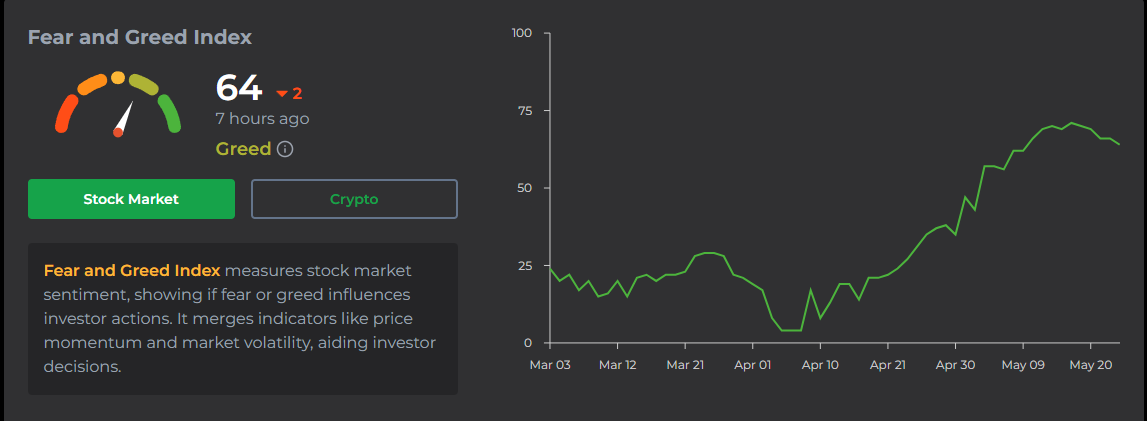
This week, the market’s mood swung from “can’t miss out” to “maybe not a shiny as I thought.”
Was it just healthy profit-taking after a wild run, or is something more brewing beneath the surface?
Let’s see….
- US Market Pullback: The S&P 500 dropped 2.6%, Nasdaq down 3.1%, and Dow off 2.2%. Tech stocks, last week’s heroes, were first to the exits as valuations looked stretched and nerves got the better of traders.
- Credit Downgrade Drama: Moody’s cut the US sovereign rating; a not-so-subtle reminder that you can’t run up the credit card forever without consequences. Bond yields spiked, and the cost of capital crept back into every investor’s spreadsheet.
- Sticky UK Inflation: April CPI in the UK came in hotter than hoped, making the Bank of England’s dovish stance look a bit premature; questions over future rate cuts started covering the ether.
- Asia’s Divergence: China’s PBoC cut rates, giving Asian equities a boost, while Japan and Korea continued to wrestle with trade headwinds.
- Macro Data & Geopolitics: US PMI, Eurozone inflation, UK retail sales; all a bit mixed. Meanwhile, global headlines kept everyone on their toes.
So, was this just a technical breather?
Partly… mainly…. well after a 5–7% weekly surge, some digestion is natural. But add in the credit downgrade, sticky inflation, and a reminder that summer volatility is never far away, and you’ve got a market that’s pausing to check the map before the next sprint.
What’s Pertinent This Week?
- Bond Market in Focus: The US credit downgrade and a spike in Treasury yields put debt sustainability and the cost of capital back in the spotlight. Suddenly, those “higher for longer” warnings don’t sound so theoretical.
- Asia’s Divergence: China’s rate cut buoyed Asian equities; Japan and Korea are still navigating trade crosswinds.
- Macro Data: US PMI, home sales, Eurozone inflation, and UK retail sales all added to the choppiness. Investors are parsing every data point like a detective at a crime scene.
It looks like the next week will be a week of further reflection in the markets, and the hue from week 20 become a little more lacklustre.
Perhaps, then as the shine tarnishes on the risk markets, it seems like an appropriate time to reflect upon something shiny; gold.
Gold: The Timeless Hedge; A Sunday Brunch Reflection
Continuing this series’ focus on investment education, I thought this Sunday morning was the perfect time to reflect on an asset class that’s been a hedge against world liquidity crises, inflation, and market chaos for centuries: gold.
Let’s be honest gold isn’t going to send you a dividend check, and it won’t make you rich overnight. But its “economic DNA” is unique: it’s scarce, tangible, and immune to central bank printing presses. With just over 216,000 tonnes ever mined and annual supply growth of only 1.6%, gold is the ultimate “can’t print more of it” asset.
Why does this matter now? Because gold’s real power is as a portfolio stabilizer. When inflation runs hot, currencies wobble, or markets get the jitters, gold often shines brightest. Central banks and institutional investors know this; hence their steady accumulation, especially in times of geopolitical tension.
Gold’s negative correlation with stocks and bonds means it often zigs when everything else zags. A modest allocation (say, 5–10%) can help smooth out the ride, especially when markets are swinging between fear and FOMO. Sure, gold can be volatile and pays no yield, but as a strategic hedge (especially in a world of monetary experimentation and ballooning debt) it’s still a powerful tool for diversification and wealth preservation.
So, as you contemplate your portfolio over that second cup of coffee, ask yourself: does your strategy have enough ballast for the next storm? In a world where liquidity can vanish overnight and headlines can turn on a dime, that old yellow metal still deserves a seat at the table.
Gold Is Booming; So… Should It Be in Your Portfolio?
Gold is having a moment. Prices have surged to all-time highs in 2025, headlines are full of gold fever, and investors are piling in. But amid the hype and the headlines, it’s worth asking: does gold really deserve a place in your portfolio?
Let’s be clear gold is not a magic bullet. It doesn’t pay dividends. It doesn’t generate interest. And despite its reputation for stability, gold can swing wildly in price. So why do so many experts still recommend holding gold-usually 5–10%-in a diversified portfolio?
The answer lies in gold’s unique economic DNA. It’s scarce, tangible, and globally recognized. You can hold it in your hand, and no central bank can print more of it. That physicality and scarcity are what set gold apart from stocks, bonds, or even cryptocurrencies.
Scarcity and Safe-Haven Status
Here’s the basic math: just over 216,000 tonnes of gold have ever been mined. Each year, mining adds only about 3,500 tonnes-a growth rate of just 1.6%. This tight supply, combined with gold’s durability, makes it a classic “safe haven.”
When inflation runs hot, currencies wobble, or geopolitics get messy, investors flock to gold. Unlike paper money, gold can’t be conjured out of thin air!
 What’s Driving Gold’s Surge?
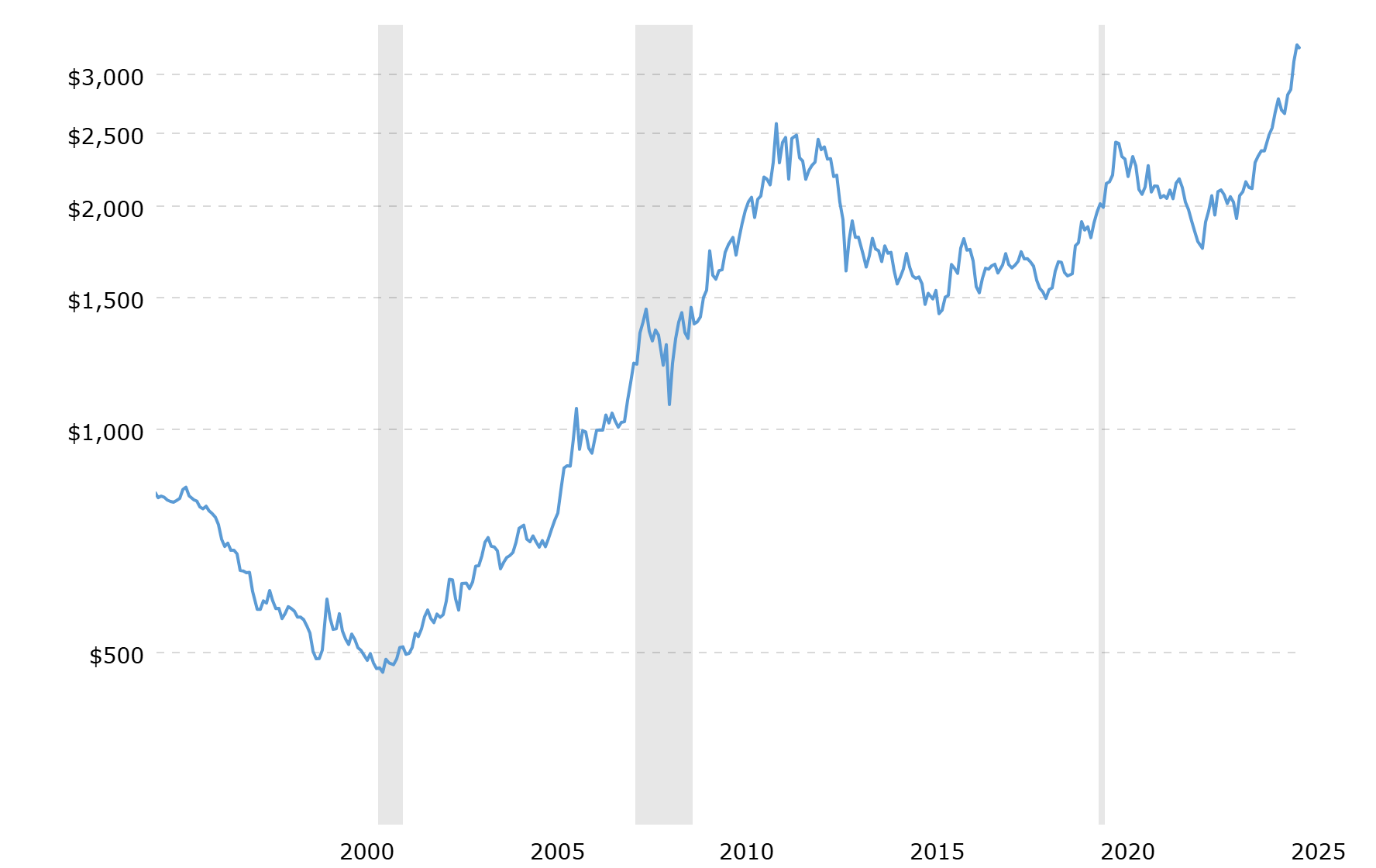
In the past year, gold outperformed every other major metal, rising 27% in 2024 and breaking the $3,200 per ounce barrier in 2025. Why?
Three big reasons:
- Persistent inflation and expectations of more monetary easing weakening currency values.
- Escalating geopolitical tensions and trade wars; global currencies are now weapons of war rather than couriers of value
- Worries about global financial stability and ballooning government debt and the desire to hold assets unrelated to this uncertainty.
It’s not just individuals buying gold. Central banks and institutional investors are also increasing their holdings, often through exchange-traded funds (ETFs).
The Real Role of Gold: Diversification and Risk
Gold’s real value isn’t about chasing quick gains. It’s about balance. Gold moves differently than stocks or bonds, often rising when other assets fall. This “negative correlation” makes it a powerful diversifier. Over the long term, gold has delivered nearly 8% annualized returns since 1971-matching equities and beating bonds and many commodities.
Crucially, gold shines brightest in times of crisis. When inflation spikes, markets tumble, or currencies falter, gold often holds its value-or even climbs. That’s why it’s called a hedge. It won’t make you rich overnight, but it can help protect your wealth when everything else is falling apart.
The Drawbacks: No Yield, Some Volatility
Let’s be honest: gold isn’t perfect. It pays no income. Its price can drop, especially when the economy is strong and investors are feeling bold. That’s why most experts say gold should be a minority position in your portfolio-enough to cushion the blows, not so much that you miss out on growth elsewhere.
The Outlook: Still Relevant in 2025?
Today’s gold rush is driven by a mix of inflation, uncertainty, and scepticism about fiat currencies. Analysts see prices ranging from $2,900 to $3,700 per ounce this year. Gold’s liquidity, lack of credit risk, and dual role as both an investment and a consumer good (think jewellery and tech) keep it relevant-even as new asset classes emerge.
The Bottom Line
Gold isn’t a cure-all. But in a world of uncertainty, it remains a unique and valuable tool for investors looking to diversify and defend their portfolios. If you want a hedge against inflation, currency shocks, or market meltdowns, gold deserves a place at the table-just don’t bet the farm on it.
Ed’s Final Word
After last week’s FOMO sprint, markets have paused to catch their breath. Volatility is back, and headlines are a reminder that, while central banks and trade deals can move markets, fiscal realities and inflation still matter. Hedging against these risks aren’t necessarily in debt markets, more traditional markets such as Gold are also around for hedging.
For private equity and risk asset investors, it’s time to stay nimble, keep an eye on liquidity, and remember discipline, not euphoria, wins the long game.
As always, these are the thoughts and opinions of mine and no one else’s; not even Quay Financials (Gibraltar) Limited. Please do your own research before making investment decisions and reach out to Quay Financials if you have any queries or follow-ups.
For further details on Quay Financials’ approach, data privacy, and terms of use, you can review our Privacy Policy and Terms of Use on our website. Quay Financials (Gibraltar) Limited, its directors, officers, and affiliates do not accept liability for any actions or decisions taken based on this commentary.
Further Reading:
Morningstar – S&P 500 Falls 2.61% This Week to 5802.82
CNBC – Stock market news for May 23, 2025
Nasdaq – Stock Market News for May 21, 2025
Saxo Bank – Market Quick Take - 21 May 2025
Riotimes – Economic Calendar: Key Market Events for the Week from May 19 to May 23, 2025
Quay Financials – The Economics of Gold (PDF)
Week 21, 2025: In markets, the only constant is change; so keep your wits, your watchlist, and your breakfast close at hand.
Full Disclaimer
The views expressed in this blog are my own personal market observations and reflections. They do not constitute investment advice, a financial promotion, or a recommendation to buy or sell any security. This publication is not made in my capacity as a director of Quay Financials (Gibraltar) Limited, which is authorised and regulated by the Gibraltar Financial Services Commission. You should always conduct your own research and seek independent advice appropriate to your circumstances before making any investment decision.
Information has been obtained from sources believed to be reliable, but no representation or warranty is given as to its accuracy, completeness or timeliness. Market levels, weekly changes and year-to-date figures in the table are reproduced from the original Week 21 source material and have not been independently re-calculated for this web conversion. The value of investments and the income derived from them may fall as well as rise, and investors may not recover the amount originally invested. Past performance is not a reliable indicator of future results. Readers should conduct their own research and obtain independent professional advice appropriate to their circumstances before making an investment decision.
