The views expressed are Ed le Feuvre's personal market observations and do not constitute investment advice, a financial promotion or a recommendation to buy or sell any security. Read the full disclaimer.
Dear Quay Financials
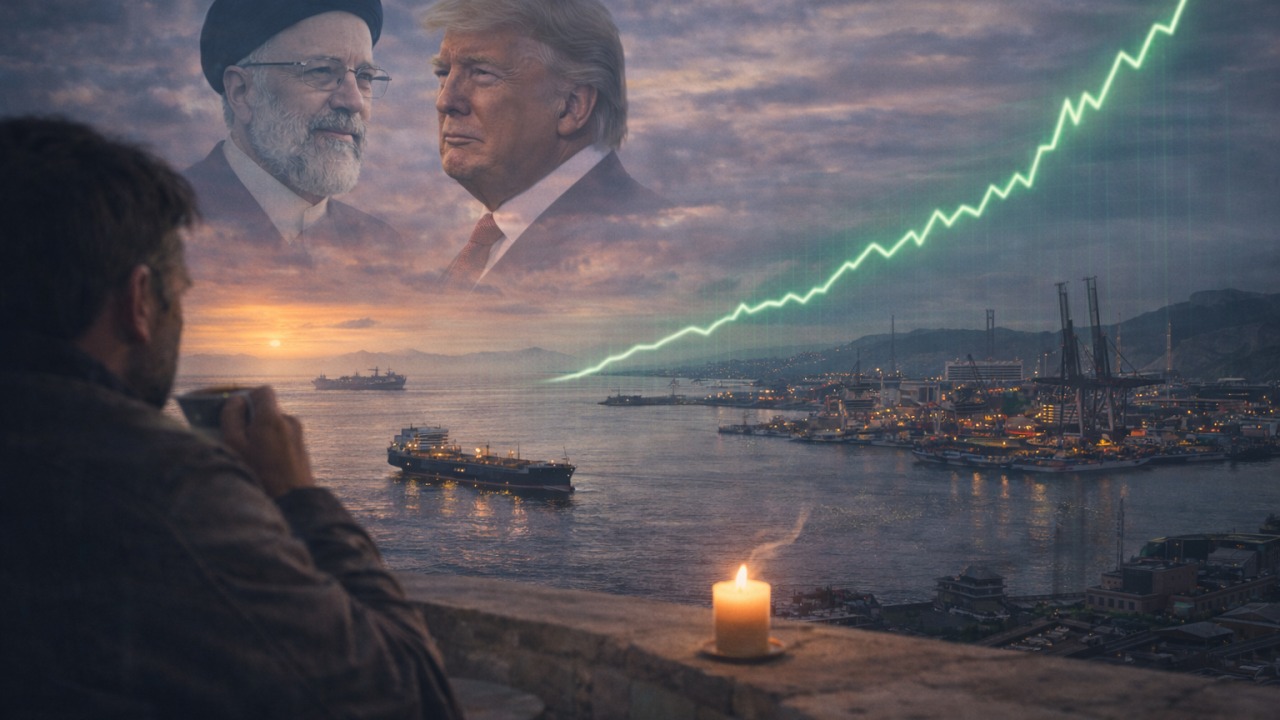
Sunday morning in Gothenburg, and the city is doing that deceptive Scandinavian trick where the light says June but the wind still insists on February. Down on the Göta älv, cranes, ferries and tourist boats share the same grey-green water, and every café window feels like a small act of resistance against the breeze. Inside ours, a birthday brunch is doing its best to compete with the harbour: candles, cardamom buns, and coffee that actually earns the description.
Markets this week felt a lot like that river. For weeks, flows have been choked and redirected by a war half a world away as the Strait of Hormuz turned from shipping lane into pressure point. Then, almost overnight, the barriers started to lift. Iran declared the strait open for the remainder of the ceasefire, tankers began to move along pre-agreed corridors, and oil – which had spent March testing how comfortable the world was with three-digit prices – suddenly remembered how gravity works.
Equities, which had already been climbing the wall of worry, took the hint. By Thursday and Friday, the S&P 500 and Nasdaq were printing fresh record closes, the Dow tagged along, and the Russell 2000 did its best to show that smaller companies would quite like to be invited back to the party. The mood is not euphoric, the VIX is in the high teens rather than on holiday, but the tape has shifted from “war as base case” to “fragile peace with optionality in both directions.”
So, another coffee in hand and the birthday candles safely extinguished, let’s walk through a week where three stories did the heavy lifting: records on Wall Street and beyond, a reopened chokepoint and collapsing war premiums, and a macro-policy backdrop that still insists the cost of time is high even when markets are willing to take more risk.
Recap: Where We Left Off (Week 15)
Week 15 closed with markets tentatively exhaling after the first ceasefire headlines from the Gulf. Hormuz had shifted from outright closure to a two-week truce, tankers were beginning to move again, and WTI had stepped back from the 110 region into the high-90s. Japan’s Nikkei was rewriting the record book even as long JGB yields stayed uncomfortably high, and global equities had managed to rally alongside four-handle US Treasury yields, a risk-on move with visible guard-rails.
We framed last week around three questions. Would the ceasefire hold long enough for oil to re-price meaningfully, or was the sharp drop just a headline-driven head fake? Would equity markets keep climbing the wall of worry, or would the rally run into earnings reality and war fatigue? And would central banks start to lean against the easing in financial conditions, or content themselves with a slightly less nervous tape in the middle of a very political year?
Week 16 did not answer all of those questions, but it did move the story on. Oil’s war premium took another leg lower as Hormuz genuinely reopened to commercial traffic, US and global equities extended their rebound into outright record-setting, and the macro data reminded everyone that while growth is still there, so is a higher-for-longer policy stance.
If you missed last week’s dispatch you can find it here: Week 15, 2026: Ceasefires in Hormuz, Nikkei Records, and Risk-On with Guard-Rails (LinkedIn).
This Week: Records, Re‑Opening, and Risk Still Priced
Weekly Market Table
| Asset | Week 16 2026 Close | WoW | YTD | Comment |
|---|---|---|---|---|
| S&P 500 | 7,126 | 4.53% | 2.83% | new highs as markets lean into ceasefire and earnings |
| Nasdaq Composite | 24,468 | 6.84% | 3.71% | record tech-led surge on AI and easing war fears |
| Russell 2000 | 2,777 | 5.55% | 9.57% | small caps catch up in risk-on, funding still a headwind |
| FTSE 100 | 10,850 | 2.35% | 9.92% | energy and banks lift UK blue chips in post-shock calm |
| STOXX Europe 600 | 620 | 1.14% | 5.33% | Europe consolidates earlier relief rally at higher plateau |
| Nikkei 225 | 57,500 | 1.01% | 13.40% | near-records as Japan pairs stronger earnings with pricier duration |
| Hang Seng Index | 26,200 | 1.18% | 1.48% | tentative recovery in China-sensitive names as oil shock fades |
| Gold ($/oz) | 4,575 | -3.93% | 1.01% | gives back war premium but holds as policy-error hedge |
| Bitcoin (BTCUSD) | 76,000 | 4.14% | -12.57% | risk-on bounce; still well below war-scare peaks |
| WTI Crude ($/bbl) | 88.00 | -8.87% | 50.81% | war premium unwinds fast as Hormuz shipping resumes |
| US 10Y Treasury | 4.35% | 0.93% | 5.33% | yields edge higher, keeping higher-for-longer firmly priced |
| US 2Y Treasury | 3.85% | 1.05% | 10.63% | front end nudges up, rate-cut hopes stay modest |
| JPY 30Y Treasury | 3.65% | 0.55% | 7.04% | Japan long end stays elevated, confirming end of free yen duration |
| US Dollar Index (DXY) | 98.2 | -0.51% | 0.32% | dollar softens as safe-haven bid unwinds on ceasefire |
Values and commentary are reproduced from the supplied Week 16 market table. Negative weekly moves are shown in red; positive asset-price moves are shown in green. Rising government bond yields are treated as negative for bond prices.
US & Global Equities
- US large caps climbed the wall of worry again. The S&P 500 pushed on to fresh record territory as investors leaned into the Hormuz ceasefire, a calmer oil tape and still-resilient earnings, extending the April rebound rather than starting a new melt-up. The move felt more like a reluctant recognition that, so far, growth has absorbed higher energy and higher real yields better than feared.
- The Nasdaq set new highs on “peace prospects”. The Nasdaq Composite continued its run of record closes, helped by mega-cap tech and communication-services names as coverage framed the week as a “peace-prospects-fuelled” surge. The index remains sensitive to the higher-for-longer rate backdrop, but the tape suggests investors are still willing to pay up for cash-generative AI and software franchises.
- Small caps tried to rejoin the party. The Russell 2000 advanced but continued to lag the large-cap indices on a year-to-date basis, reflecting its greater exposure to floating-rate debt and the domestic real economy. For all the relief, the index still trades well below its prior cycle peaks – a reminder that valuation headroom exists, but so does balance-sheet risk.
- Europe digested the ceasefire rally. The FTSE 100 and STOXX Europe 600 largely consolidated the previous week’s explosive gains off the initial ceasefire headlines, with value-heavy, dividend-paying sectors and energy names helping Europe hold recent highs. Onequity’s weekly outlook described this as digestion rather than a new leg higher, with investors watching oil and the US–Iran process for the next cue.
- Japan stayed near the top of the leaderboard. The Nikkei 225 hovered close to its record levels, underpinned by ongoing policy normalisation that still leaves real yields attractive and the yen weak. The combination of governance reform, improved shareholder returns and foreign investors rediscovering Tokyo as an equity market rather than a macro footnote continued to drive flows.
- Hong Kong kept a low-key bid. The Hang Seng Index edged higher and participated modestly in the global risk-on tone, a small but notable change for an index that has spent years in the penalty box. Policy support in China and better news from selected platform and logistics names helped keep the bid intact, even as investors remained cautious on the broader China complex.
Gold, Digital Assets and Other Assets
- Oil stepped back from the brink , again, but not all the way. Crude took another leg lower as Iran confirmed that Hormuz would remain open to commercial traffic for the rest of the ceasefire and tankers began to move along agreed corridors. The war premium bled out of the front of the curve, but prices still sat in an elevated, “energy-tax-not-panic” range rather than back at last year’s comfort levels.
- Gold stayed expensive but lost some urgency. Bullion spent the week consolidating in the mid-4,500s per ounce, trading with more two-way interest than during March’s straight-line surge. The price action looked like a classic hedge that investors are reluctant to abandon even as the immediate Iran shock fades – insurance that remains costly, but not obviously mis-priced in a world of stubborn real yields.
- Bitcoin remembered it is beta, not ballast. Bitcoin held in the 70k-plus region, with most venues printing Friday closes in the low-to-mid-70s and flows favouring the largest, most liquid tokens. The move had all the hallmarks of a high-beta risk expression rather than a crisis hedge: ETF inflows resumed, futures shorts were forced to cover, and BTC traded more like a levered Nasdaq proxy than a war hedge
Macro & Policy
- US yields stayed high and stubborn. The 10-year Treasury ended the week in the low-4s, barely changed despite the easing in oil, while the 2-year remained in the high-3s, leaving the curve still inverted but a little less dramatically so than at the start of the year. With labour data still “good enough” and the Beige Book emphasising resilience rather than recession, traders were content to let energy do the easing while keeping duration bets on a short leash.
- The dollar drifted, it did not lose its throne. The DXY slipped modestly as relief in oil and strong non-US equity performance encouraged a bit of rotation into Europe and Japan, but the move was more a softening than a trend change. With US real yields still the highest in the G10 and the dollar still the cleanest safe haven, any reversal in the ceasefire or a sharp data surprise could quickly reverse the move.
- Japan’s long end paused at a new altitude. Japanese 30-year JGB yields traded in the mid-3s, stabilising just shy of the recent highs that have ended the era of “free yen duration” and turned JGBs into real competition for global fixed income. Governor Ueda avoided signalling an imminent April hike, but the combination of gradual BoJ normalisation and higher global term premia keeps Japan an important – and now more expensive – anchor in the world’s duration markets.
Geopolitical Analysis
- Hormuz: Iran confirmed that the Strait of Hormuz would remain open to commercial traffic for the rest of the ceasefire, and tankers resumed movement along agreed corridors. Markets treated that as a genuine reduction in immediate supply risk, with the oil war premium falling quickly.
- Fragile ceasefires: The source material also noted ceasefires in Hormuz and between Israel and Lebanon. The market interpretation was relief rather than resolution: the immediate temperature fell, but the geopolitical map remained capable of repricing energy and risk assets quickly.
What's Pertinent This Week (Week 16)?
Records with Guard-Rails – Risk-On in a Higher-for-Longer World
The dominant story was equities pushing to new highs with their eyes wide open. Coverage was wall-to-wall on the S&P 500 and Nasdaq setting fresh records, not in a rates-cut euphoria, but in a market consciously living with four-handle Treasuries and unresolved geopolitical risk.
For capital allocation, this matters twice. Higher public marks and narrower credit spreads support financing conditions and risk appetite, but they also lift entry valuations while the cost of debt and the macro uncertainty premium remain elevated. The defensible response is sharper differentiation: more weight on cash-flow durability, pricing power and capital discipline, with less tolerance for concept stories whose only defence is multiple expansion.
Hormuz Re-Opens – War Premiums Collapse, But the Map Has Changed
The second narrative was the reopening of Hormuz and the rapid collapse of the war premium in oil. Headlines and video segments made clear that Iran and the US had agreed practical shipping corridors, that tankers were moving again, and that WTI had surrendered much of the spike that turned February and March into an energy-tax stress test.
For capital allocation, this was a live-fire drill in energy and infrastructure. Assets with the ability to hedge, pass through costs or monetise volatility came through the last month with their theses confirmed. Pure price-takers, by contrast, produced margin charts that looked more like seismographs. The week argues for more intentional exposure to storage, efficiency and diversified energy-transition infrastructure, and fewer accidental bets on single-route, single-fuel models that assume chokepoints are always open.
Fragile Peace Meets Stubborn Policy – The Cost of Time Stays High
The third narrative sat at the intersection of geopolitics and central banking. The ceasefires in Hormuz and between Israel and Lebanon lowered the immediate temperature, but the Beige Book, jobless claims and European policy commentary all pointed to a world in which growth is still “good enough” to deny doves the cuts they want.
For capital allocation, this is the slow-burn story that matters most. If the cost of time remains structurally higher than the post-GFC norm, duration assumptions, capital structures and entry timing all have to adapt. Week 16 did not change that trajectory; it reinforced it. The real risk is not simply that rates spike again, but that they stay mildly uncomfortable for longer than many models assume.
What Will Week 17 Bring?
Other catalysts:
Diplomacy: Any extension of the US–Iran ceasefire or concrete framework for Hormuz traffic beyond the current period would be a structural positive for risk assets; a collapse into renewed strikes or a hardening of the blockade would reverse much of this week’s relief.
Earnings: Q1 results move from the big banks into the core of the corporate universe. If earnings hold up in the face of higher energy and higher real yields, the market will feel vindicated at these levels; if they don’t, record index prints will start to look more like an opportunity to de-risk than a platform for the next leg higher.
Macro prints: US inflation updates, PMIs and confidence data, plus European numbers on growth and energy, will either reinforce or challenge the “resilient but not overheating” narrative that currently underpins higher-for-longer policy. Surprises now matter less for their level than for what they say about how long today’s regime can last.
Strategic positioning:
For a disciplined allocator, this is a week to keep optionality alive. There is no need to chase the last 50 basis points of the equity rally, but there is a strong case for knowing which holdings are genuinely benefiting from the new regime and which are simply being carried by the tide.
Ed's Closing Bell
Back in Gothenburg, the birthday brunch is winding down. The river outside looks unchanged; the wind hasn’t noticed that the candles are out and the plates are empty. Markets are a little like that. Hormuz can reopen, indices can set new records, and yet the underlying currents … war, energy, politics, the cost of time … keep moving under the surface.
This week’s lesson is that relief is not the same as resolution. A reopened strait and a record S&P do not erase the fact that chokepoints and higher rates are now features, not bugs, of the system. Portfolios that treat this as a return to the 2010s will keep being surprised. Portfolios that accept it as the new weather can get back to work, on pricing power, balance sheets, and the quiet, unglamorous business of resilience.
Final Words
As ever, these are personal reflections, not investment advice, and they are no substitute for your own homework or a proper conversation with someone who knows your circumstances. But if the week taught us anything, it is that candles go out quickly and currents change slowly. Position accordingly.
Please conduct your own research and seek appropriate independent advice before making investment decisions.
From Gothenburg
When a chokepoint reopens and indices hit records, the real risk isn’t missing the rally … it’s forgetting how quickly the tide can turn.
Further Reading
- Zacks – Stock Market News for Apr 17, 2026
- The Motley Fool – Stock Market Today, April 17: Oil Prices Drop As Strait of Hormuz Reopens
- Saxo Bank – Market Quick Take – 17 April 2026
- Onequity Group – Weekly Market Outlook | 13 – 17 April
- NBC News – Stocks surge and oil prices plummet after Strait of Hormuz opens
- YouTube – Oil prices plunge as Iran declares Hormuz open
- Investing.com – Oil slides … on hopes of more ceasefire talks, soft U.S. data
- The Guardian – Oil price rises as markets question durability of Middle East ceasefire
- CNBC – Earnings season could finally give the stock market some good news. Here’s what’s ahead
- CaixaBank Research – Financial Markets Daily Report 17 April 2026
Full Disclaimer
The views expressed in this blog are my own personal market observations and reflections. They do not constitute investment advice, a financial promotion, or a recommendation to buy or sell any security. This publication is not made in my capacity as a director of Quay Financials (Gibraltar) Limited, which is authorised and regulated by the Gibraltar Financial Services Commission. You should always conduct your own research and seek independent advice appropriate to your circumstances before making any investment decision.
Information has been obtained from sources believed to be reliable, but no representation or warranty is given as to its accuracy, completeness or timeliness. Market levels and weekly changes are compiled from public market data available at 12 September 2026 and may vary by venue, instrument and closing convention. The value of investments and the income derived from them may fall as well as rise, and investors may not recover the amount originally invested. Past performance is not a reliable indicator of future results. Readers should conduct their own research and obtain independent professional advice appropriate to their circumstances before making an investment decision.
