The views expressed are Ed le Feuvre's personal market observations and do not constitute investment advice, a financial promotion or a recommendation to buy or sell any security. Read the full disclaimer.
Dear Quay Financials
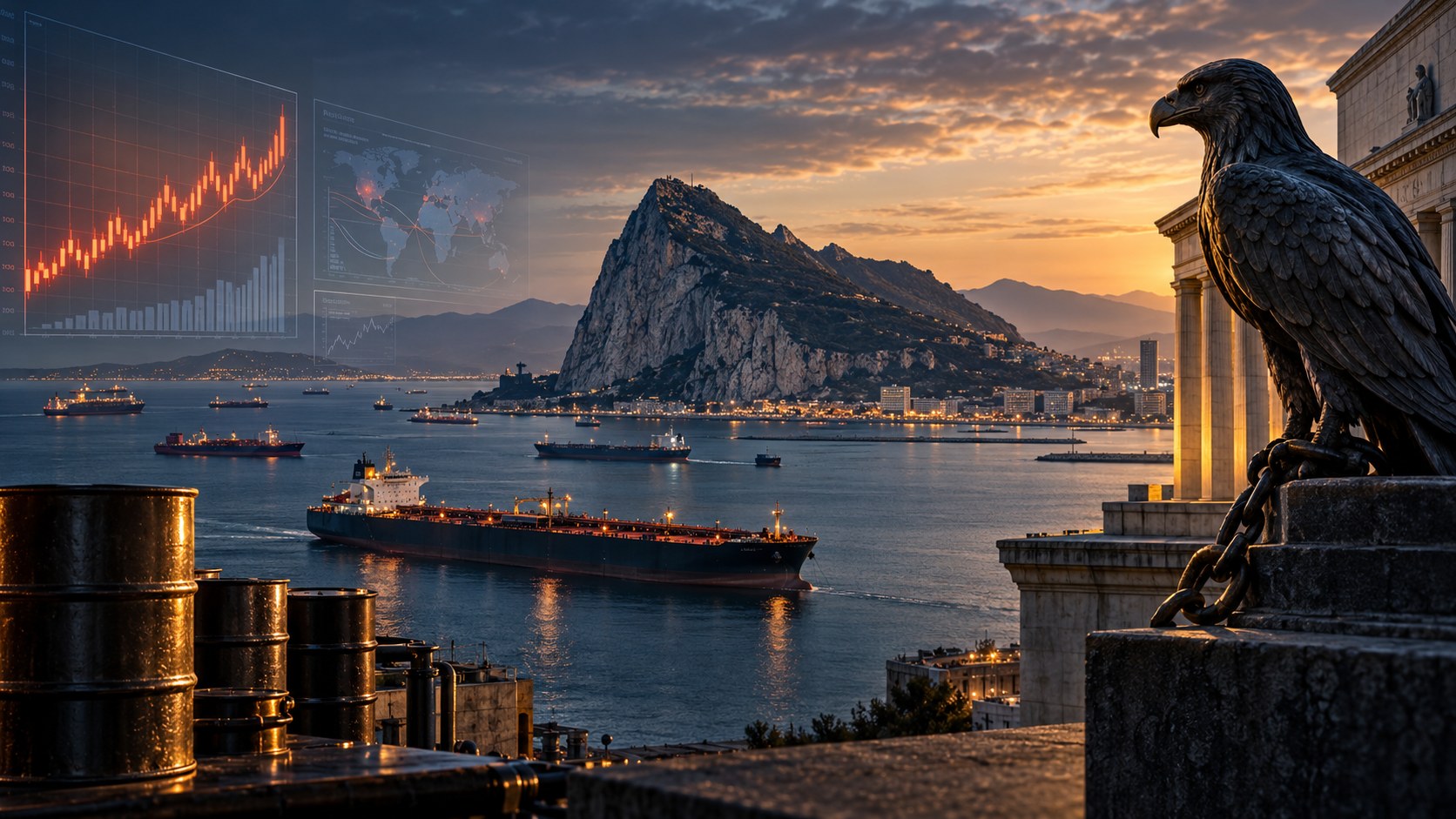
Sunday afternoon on the Rock, and the Strait is doing its favourite impression again: calm water, busy ships, and just enough light off Algeciras to persuade the first summer tourists that the world is basically under control. If you stared only at the harbour, you could almost believe it. The screens a few steps away make that harder.
One monitor is pinned to the bond market, where April’s CPI and PPI prints forced a visible reset. Headline CPI rose 0.6% month‑on‑month and 3.8% year‑on‑year, pushed higher by a 3.8% jump in energy and a 5.4% rise in gasoline; core held at 0.4% on the month and 2.8% on the year – better than the 2022–23 scare, but well north of the Fed’s comfort zone. Producer prices were hotter still: headline PPI up 1.4% month‑on‑month and 6.0% year‑on‑year, core PPI up 1.0% and 5.2% – the steepest gains in several years.
Another screen tracks oil. Brent spent the week back above 100 dollars, with intraday pushes beyond 109 as “Hormuz gloom” resurfaced in market coverage; WTI finished around 105 dollars, and every commodities note sounded more concerned about inventories and shipping than about demand. A third window shows Fed funds futures and Kevin Warsh’s newly confirmed face on a television feed, with commentators explaining that “higher for longer” is no longer a scenario but the base case.
Week 20 did not add a new character. It tightened the screws on the ones we already knew: inflation, oil and Hormuz, and a Fed with less room to be generous. Equities, remarkably, coped. The S&P 500 ended the week effectively flat in at least one US recap, and global indices slipped only modestly, even as yields marched higher and oil stayed expensive. This week’s note walks through three threads: hotter‑than‑hoped inflation, an energy market that looks more like a tax than a spike, and a Fed that has just had its leash shortened at exactly the wrong time for anyone who built their model on cheap time.
Recap: Where We Left Off (Week 19)
Week 19 closed with markets treating the Hormuz ceasefire as a reprieve, not a reset. Oil had fallen back from its war‑panic peaks, but crude remained elevated because the Strait was only partially open and physical flows were still constrained. Equities in the US, Europe and Japan hovered near or at records, powered by AI and earnings rather than cheaper discount rates, while “higher‑for‑longer” moved from talking point to working assumption as ten‑year Treasuries sat in the low‑4s and 30‑year JGBs in the mid‑3s.
Week 19 framed three unresolved questions: how long the Hormuz relief would last, whether record‑level indices could coexist with expensive energy and non‑cheap money, and whether the quiet rotation into emerging and ex‑US markets would stick. Week 20 did not settle any of them. But it did add a new fact set: hotter US inflation data, a further back‑up in yields, and more detailed warnings from the IEA and others that the oil market’s “strain” may outlast the headlines.
This Week: Hotter Prints, Costly Barrels, and a Fed on a Shorter Leash
Weekly Market Table
| Market | Week 20 close | Week 19 close | Weekly move | Year to date | Comment |
|---|---|---|---|---|---|
| S&P 500 | 7,408 | 7,399 | +0.12% | +6.90% | flat on hotter inflation, oil squeeze |
| Nasdaq Composite | 26,210 | 26,247 | -0.14% | +11.09% | AI leaders wobble as yields jump |
| Russell 2000 | 2,795 | 2,861 | -2.31% | +10.28% | higher yields bite small-cap refinancing wall |
| FTSE 100 | 10,160 | 10,233 | -0.71% | +2.93% | gives back some oil-driven highs |
| STOXX Europe 600 | 602 | 612 | -1.61% | +2.33% | inflation and energy weigh on cyclicals |
| Nikkei 225 | 61,750 | 62,174 | -0.68% | +21.79% | still near highs despite global risk-off |
| Hang Seng Index | 25,900 | 26,275 | -1.43% | +0.31% | China policy fatigue and rate worries |
| Gold ($/oz) | $4,560 | $4,704 | -3.06% | +0.68% | holds bid as inflation and war hedge |
| Bitcoin (BTCUSD) | $81,500 | $79,883 | +2.02% | -6.24% | behaves like high-beta risk, not ballast |
| WTI Crude ($/bbl.) | $105 | $97 | +8.25% | +79.95% | Hormuz risk keeps oil in three digits |
| US 10Y Treasury | 4.60% | 4.38% | +5.02% | +11.38% | yields spike on CPI and oil |
| US 2Y Treasury | 4.08% | 3.90% | +4.62% | +17.24% | front-end reprices later cuts and hike risk |
| JPY 30Y Treasury | 3.50% | 3.72% | -5.91% | +2.64% | Japan long end steady versus global backup |
Week 20 closes are shown against Week 19, with year-to-date performance measured against the final 2025 reference close used in Ed's market table. Treasury rows show relative changes in yield, matching the source table.
US & Global Equities
- US large caps held up, but the tone turned defensive. The S&P 500 still managed a small weekly gain of about 0.1%, its seventh in a row, but only because earlier record-high sessions offset a sharp Friday sell-off as hotter CPI/PPI and higher oil revived inflation worries.
- The Nasdaq’s AI engine paused rather than reversed. The Nasdaq Composite ended the week fractionally lower (around –0.1%), after making fresh intraday highs earlier in the week; higher bond yields and more expensive energy started to bite into the most rate-sensitive growth names, even as AI and cloud earnings remained strong.
- Small caps reminded everyone where the leverage sits. The Russell 2000 fell roughly 2.4% on the week, underperforming large caps as investors marked down balance-sheets with more floating-rate debt and 2026–27 refinancing walls in a world of rising front-end yields.
- Europe stepped back as inflation and oil re-asserted themselves. The STOXX 600 finished Friday about 1.6% lower, with major bourses across London, Paris, Frankfurt and Milan all down as the jump in US producer prices and another push higher in crude reinforced fears that central banks will have to stay restrictive longer.
- Asia stayed sensitive to both yields and geopolitics. A global weekly recap has Asia-Pacific equities off about 1.7% as Japan, China and Hong Kong gave back earlier gains, with the Nikkei drifting from recent highs and the Hang Seng still trading like a “show-me” market while investors watched the Trump–Xi summit and the unresolved Hormuz story.
Gold, Digital Assets and Other Assets
- Gold remained elevated, but gave back some of the prior week’s strength. Bullion ended the week at roughly $4,560, down 3.1%, while unresolved Hormuz risk and hotter CPI/PPI kept the broader policy-error hedge case intact.
- Bitcoin again traded like what it is: high-beta risk, not ballast. Crypto followed the swings in growth stocks and yields more than the war headlines, selling off on inflation-driven rate worries and rallying only when liquidity sentiment improved, reinforcing that it amplifies risk-on views rather than diversifying the portfolio.
- Oil stayed in “energy tax” territory, even without fresh panic. Brent spent most of the week above 100 dollars and WTI finished around $105, with both repeatedly pulled higher intraday as IEA and OPEC updates underlined war-related supply losses and shrinking global inventories rather than any real easing in fundamentals.
- Rates and the dollar moved from “uncomfortable” to “actively tightening the screws.” US 2-year yields pushed back above 4% and the 10-year toward 4.6%, their highest levels in roughly a year, while the dollar firmed as investors rotated toward better-yielding safe assets in response to the hotter inflation prints.
- Japan’s long end quietly reinforced that “risk-free in yen” now matters. Thirty-year JGB yields remained in the mid-3s, adding a durable second anchor to global duration alongside Treasuries and nudging multi-asset allocators to treat Japanese sovereigns as genuine competition for credit and infrastructure capital, not an afterthought.
Macro & Policy
- The Fed’s message: hot prints have closed the door on easy cuts. April CPI and PPI both overshot expectations – headline CPI up 0.6% month-on-month and 3.8% year-on-year, PPI up 1.4% and 6.0% – convincing futures markets to price out most 2026 easing and assign a non-trivial chance of a hike by early 2027.
- Higher-for-longer is now the base case, not a slogan. US 2-year yields climbed back above 4% and the 10-year toward 4.6%, their highest levels in roughly a year, as Kevin Warsh’s confirmation as Fed Chair reinforced expectations of a more hawkish, balance-sheet-focused regime that will not cut just to support asset prices.
- Elsewhere, central banks are constrained by the same mix of energy and politics. The ECB and BoJ face oil still in three-digit territory and volatile inflation, leaving little room for aggressive easing, while a firmer dollar and higher global yields tighten financial conditions for anyone borrowing in hard currency.
Geopolitical Analysis
- Hormuz has shifted from headline shock to medium-term regime. UNCTAD and IEA work highlight that roughly one-fifth of global oil trade normally passes through the Strait and that cumulative losses since the Iran war began now exceed one billion barrels, forcing inventories lower and keeping three-digit oil in play.
- Ceasefire diplomacy is real, but so is the risk of a 150-dollar tail. The Trump–Xi summit produced careful language that the Strait “must stay open,” yet European and commodity strategists warn that even a June reopening would leave the system tight into late summer and that any setback could quickly push prices far above current levels.
- Geopolitical chokepoints are being priced as an asset class, not a footnote. Hormuz now sits alongside the Red Sea and Suez in investors’ models, with infrastructure, storage and logistics assets that can route around or monetise these bottlenecks gaining strategic value for private capital, while energy-intensive, price-taking businesses absorb the tax.
What's Pertinent This Week (Week 20)?
Hotter inflation and a bond-market wake-up
Coverage Dominant | Quality Data-rich, cross-asset | Market Impact High across valuation, funding and exits
April’s US CPI and PPI prints came in hotter than expected – headline CPI at 3.8% year-on-year and PPI at 6.0% – driven largely by energy and fertiliser-linked food costs. Global bonds sold off hard: the US 2-year yield pushed back above 4%, the 10-year toward 4.6% and the 30-year above 5.1%, their highest levels since 2025, as markets priced out most 2026 cuts and assigned decent odds to a hike by early 2027. For private equity that means discount rates resetting higher, funding costs rising in real time and exit multiples increasingly tethered to demonstrable pricing power rather than the hope of easier policy.
Hormuz, oil’s “energy tax”, and the risk of a second inflation wave
Coverage Broad, energy- and macro-led | Quality Scenario-driven | Market Impact High for margins, inflation and infrastructure
The Iran war and constrained traffic through the Strait of Hormuz kept oil in three-digit territory, with WTI ending the week above 105 dollars and Brent topping 109 after another jump on Friday. IEA and street commentary now frame the conflict as a medium-term regime rather than a short-term shock, warning that cumulative supply losses above one billion barrels and rapid inventory drawdowns could leave Europe and parts of Asia exposed to outright shortages if reopening slips. In portfolio terms, oil has turned into a structural tax on energy-intensive, price-taking businesses, while infrastructure, storage and logistics assets that can route around or monetise chokepoint risk gain strategic value and pricing power.
A shorter leash for the Fed and a thin Trump–Xi “truce”
Coverage Growing in weekly outlooks | Quality Forward-looking, policy-aware | Market Impact Medium now, large over the cycle
Kevin Warsh’s confirmation as Fed chair arrived just as the inflation data and bond sell-off narrowed his room for manoeuvre, with futures now implying only a token chance of cuts in 2026 and roughly 60% odds of at least one hike over the next year. At the same time, President Trump’s high-profile trip to Beijing ended with warm words but few concrete deliverables: oil stayed high, Hormuz remained effectively shut and tariffs were pointedly “not discussed,” leaving markets worried that US-China trade and energy tensions could flare again once the current truce expires. For private equity, this combination hardens the “higher-for-longer” backdrop and keeps policy and geopolitics firmly inside the valuation and exit conversation rather than in the footnotes.
Full Disclaimer
The views expressed in this blog are my own personal market observations and reflections. They do not constitute investment advice, a financial promotion, or a recommendation to buy or sell any security. This publication is not made in my capacity as a director of Quay Financials (Gibraltar) Limited, which is authorised and regulated by the Gibraltar Financial Services Commission. You should always conduct your own research and seek independent advice appropriate to your circumstances before making any investment decision.
Information has been obtained from sources believed to be reliable, but no representation or warranty is given as to its accuracy, completeness or timeliness. Market levels and weekly changes reproduce the source article prepared for Week 20, 2026 and may vary by venue, instrument and closing convention. The value of investments and the income derived from them may fall as well as rise, and investors may not recover the amount originally invested. Past performance is not a reliable indicator of future results. Readers should conduct their own research and obtain independent professional advice appropriate to their circumstances before making an investment decision.
